
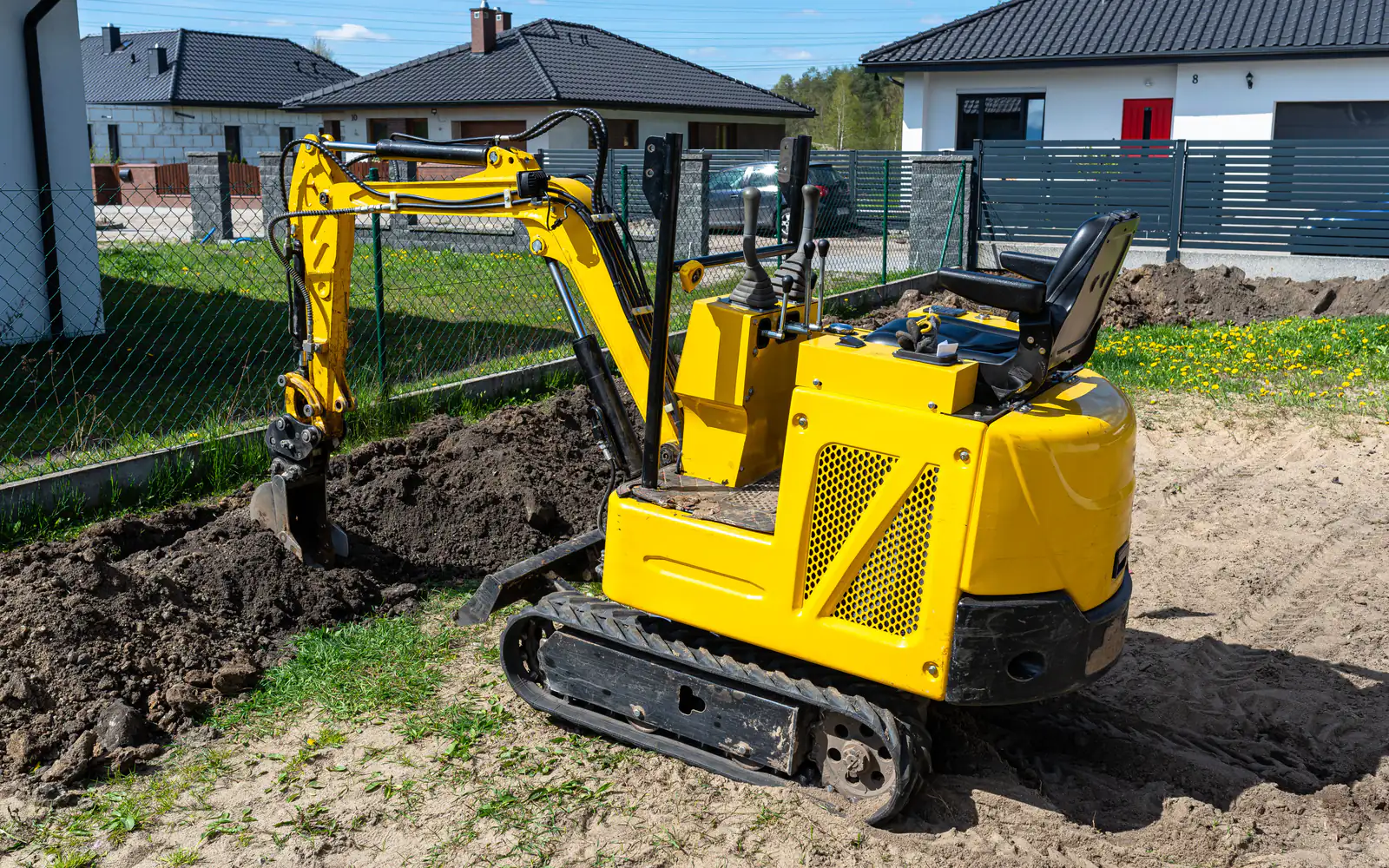
Yard Drainage Solutions in Cincinnati, OH
Stop mowing around the puddle.
Regrading, swales, downspout lines and gravel for yards and barn lots that hold water, shed it the wrong way, or wash out every time it storms.
Yard drainage solutions start with figuring out where the water comes from, because the fix depends on it. Roof water, runoff from the hill above you, a low spot with nowhere to drain and slow clay soil all look the same from the back porch: a yard that's wet when it shouldn't be.
Brushcutrs fixes yard drainage with a Kubota mini excavator, small enough to work in a finished backyard and strong enough for barn lots and pasture gates. We bid the job and run the machine ourselves. We do a lot of this work on properties we've just cleared, since opening up the ground is usually when the drainage trouble becomes obvious.
Figuring out why the yard stays wet
The best time to look at a drainage problem is during or right after a good rain. Watch where the water comes from and where it stops. Gutters dumping at the corners, a neighbor's yard that slopes into yours, a driveway that sheds onto the lawn, a dip that was never filled when the house was built: each one points to a different fix.
Underneath all of it is the ground itself. Most of Northern Kentucky and Greater Cincinnati sits on heavy clay that drains slowly, so water that would soak in somewhere sandier just sits here. That's why a fix that works on paper sometimes needs a little extra help on clay.
If we're already there doing it and they want us to do whatever, we'll do it.
Brushcutrs owner
Standing water and soggy low spots
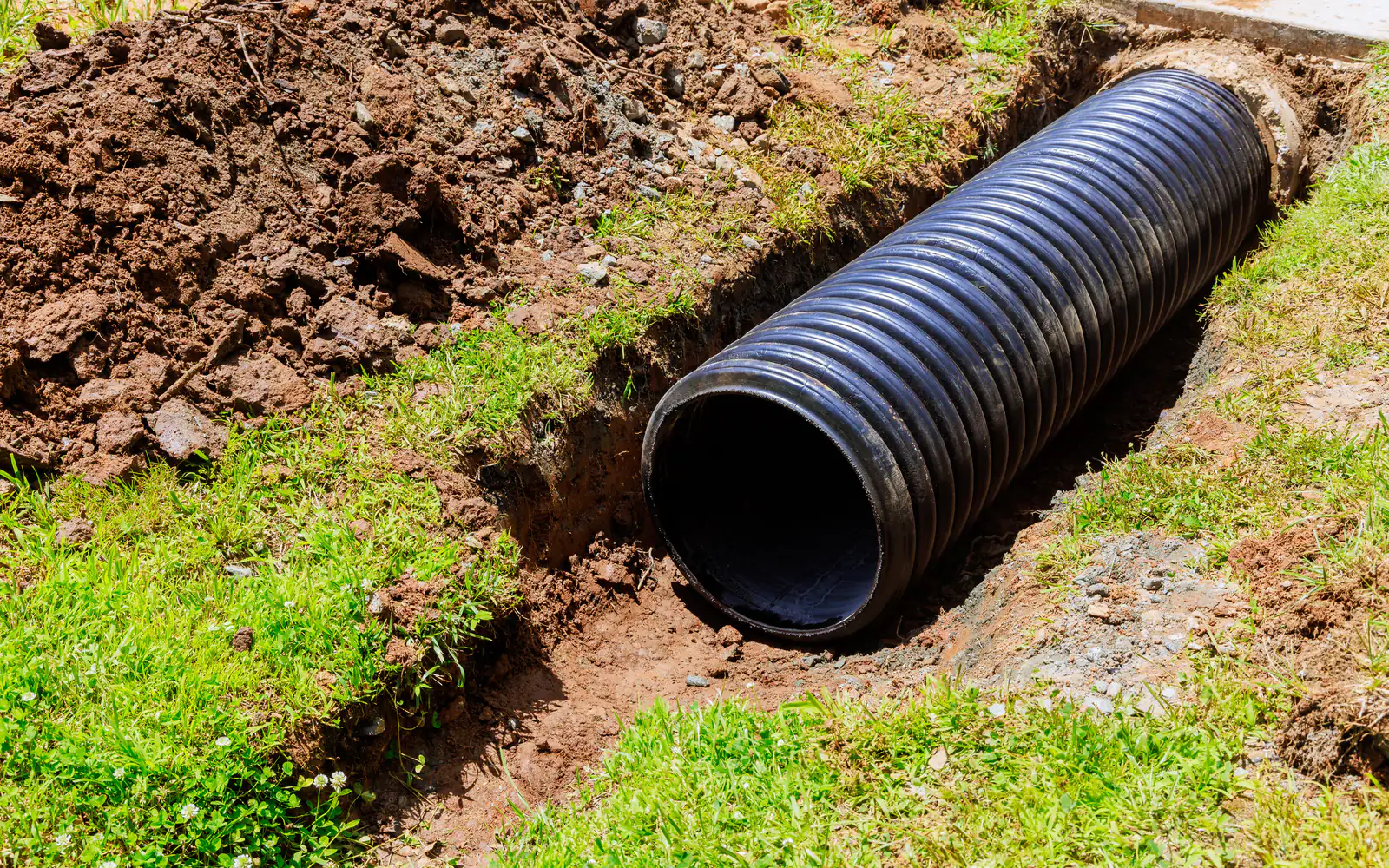
A low spot that holds water after every rain can be filled and regraded so the surface sheds toward somewhere lower. When the whole area is flat with nowhere to slope, a drain line or a French drain carries the water out underground instead.
Regrading for drainage doesn't have to mean tearing up the whole yard. Often it's a matter of shaving a high spot, filling a dip and giving the surface a gentle, steady fall. The mini excavator does that work with a light touch, and the area gets seeded or covered once the grade is right.
Water running toward the foundation or barn
Ground around a building should slope away from it, but settling and years of mulch and landscaping often flip that around. We pull the grade back so it falls away from the walls, tie downspouts into buried lines, and where water comes off the hill above, cut a swale to steer it around the building.
Barns get the same treatment. A barn sitting at the foot of a slope can take every bit of runoff from the field above it. A swale across the hill and a little regrading at the doors can keep the aisle dry and the bedding where it belongs.
Hillside washouts and gullies
Cincinnati and Northern Kentucky are hilly country, and concentrated runoff on a slope cuts gullies fast. A washout often starts where a downspout, a driveway or a path funnels water into one spot. Fixing it means filling and shaping the gully, then spreading that water out or giving it a stable path with a swale.
After a brush clearing or mulching job on a hillside, the layer of mulch left on the ground helps hold the soil. If the slope shows where water has been cutting, that's the time to shape it right, while the machine is already there.
Gravel at gates, driveways and barn doors
Some drainage problems are really mud problems. The pasture gate where the horses gather, the spot where the truck turns around, the edge of a gravel drive that's been pushed into the grass. We dig out the soft ground, shape it to shed water and build it back up with gravel so it holds up through a wet spring.
Where we fix yard drainage
We're based in North Bend, just west of Cincinnati, and Northern Kentucky is where we most want to work: Florence, Union, Burlington, Independence, Covington's hillside neighborhoods and the farms across Boone, Kenton and Campbell counties. We also fix backyard drainage across Cincinnati, up toward Hamilton, OH, and in Southeast Indiana around Lawrenceburg, Aurora and the Dearborn County hills.
Yard drainage pulls from the rest of our light excavation work. Buried fixes are covered on French drain installation, and open ditches and drain lines on trenching and drainage excavation.
Goes well with
- Trenching and drainage excavation: Trenches for drain and downspout lines, drainage ditches and swale cutting, dug with the right fall through heavy clay.
- French drain installation: French drains and curtain drains with fabric, washed gravel, perforated pipe and a real outlet, built for heavy clay ground.
- All light excavation services
What people call us for
Common yard drainage solutions projects
Regrading a low spot by the patio
A dip that holds water after every rain gets filled and given a steady fall away from the house.
Swale between two houses
A shallow grassed channel down a shared side yard that carries runoff to the street side or the back of the lot.
Gravel pad at a pasture gate
The mud hole where horses and trucks meet gets dug out, shaped and built back up with gravel.
Hillside washout repair
A gully cut by runoff gets filled and shaped, with the water spread out or given a stable path down the slope.
Downspouts into a swale
Gutter water tied into buried lines that empty into a swale, instead of pouring onto the lawn at the corners.
Questions
Yard drainage solutions questions
Why does my yard hold water after it rains?
Usually it's a mix of a low spot with nowhere to drain and slow clay soil underneath. Water can't soak in fast, and if the surface doesn't slope anywhere, it sits. Roof water and runoff from higher ground make it worse.
Is regrading enough, or do I need a drain?
If the problem is surface water and there's somewhere lower to send it, regrading or a swale often does the job. If the ground stays wet underneath or the yard is too flat to slope, a buried drain is the better fix. Many yards end up with a little of both.
Can you fix a muddy pasture gate or barn entrance?
Yes. We dig out the soft ground, shape the area so water runs off instead of pooling, and build it back up with gravel. It's one of the most common small jobs on horse farms.
When is the best time to fix backyard drainage?
Late spring through fall, when the ground is firm enough to work without rutting the yard. It helps to watch the yard in a heavy rain first, so you can show us where the water goes. Urgent problems can sometimes be handled sooner.
Will fixing my drainage send water onto my neighbor's yard?
It shouldn't. We plan where the water goes before we dig and aim to keep it on your property, moving to a lower spot, a ditch or an outlet that can take it. If there's no good place, we'll say so instead of moving the problem next door.
Where we do yard drainage solutions
Northern Kentucky first, then Greater Cincinnati, Southeast Indiana and out to Hamilton, Lexington and Georgetown, KY.
Ready to get that ground cleared?
Call or text us, or send the form. We'll walk the ground with you and give you one price for the job.