
Excavating in Cincinnati, OH
Clear the ground, then fix the water.
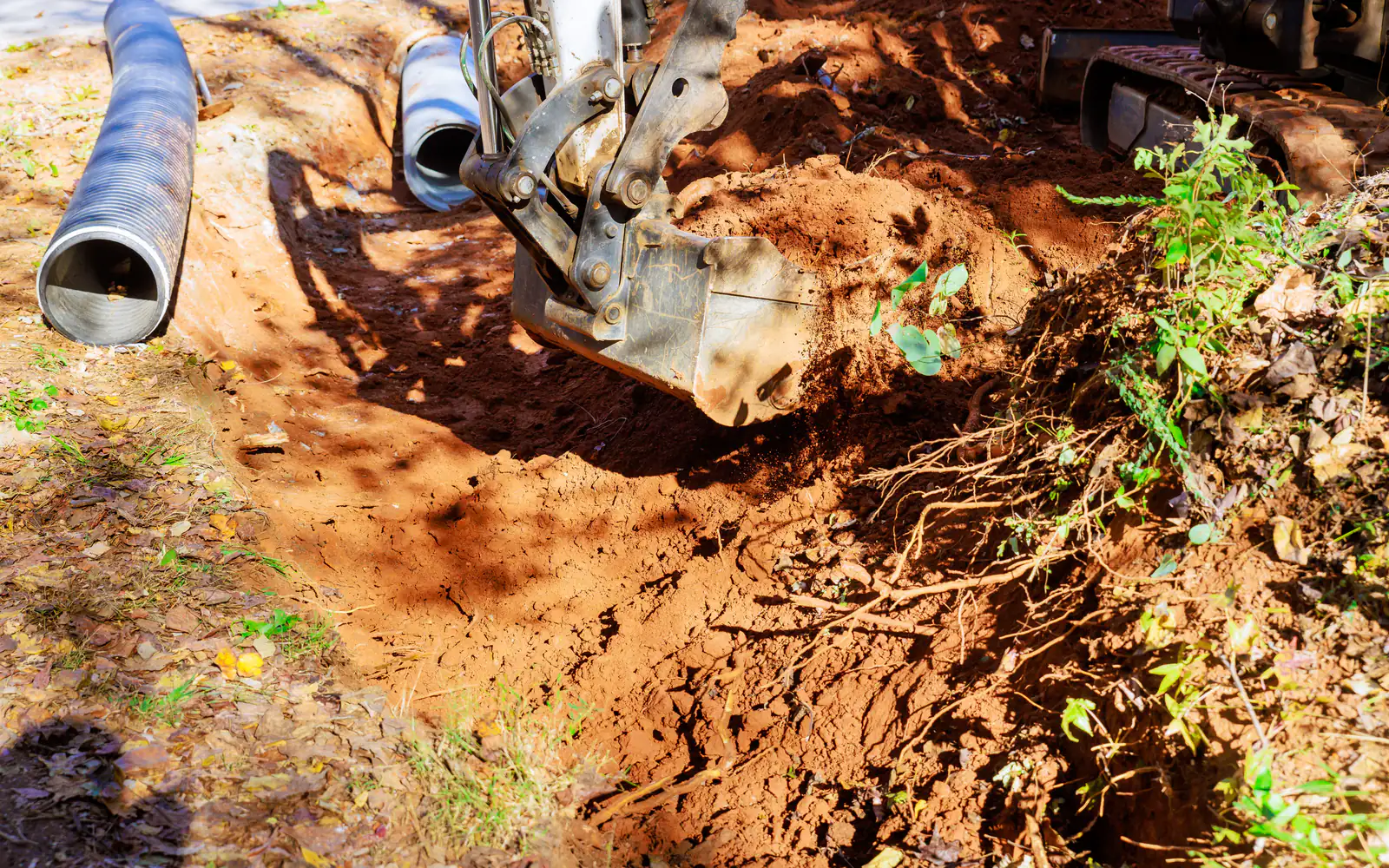
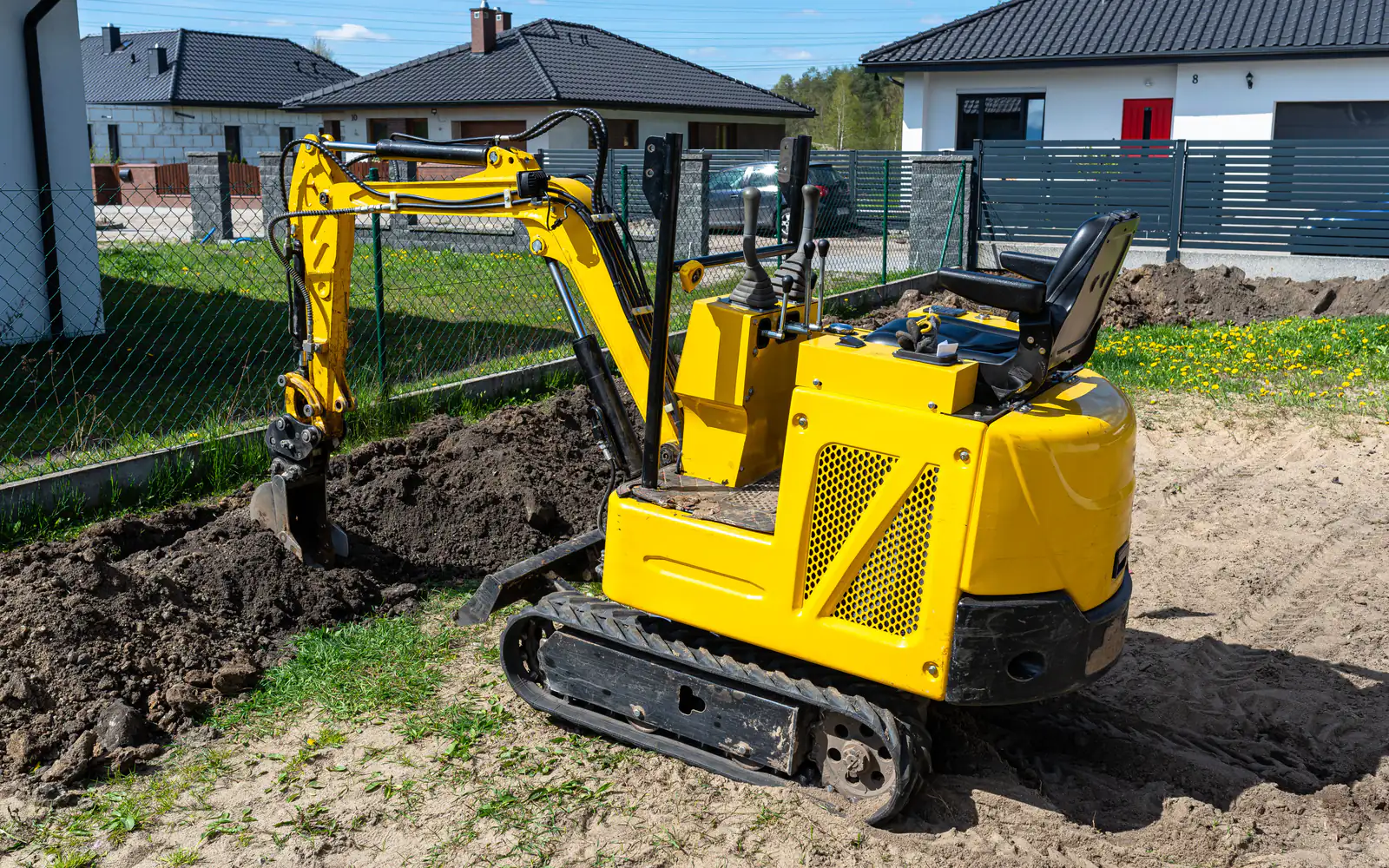
A Kubota mini excavator for the small digging a property needs: drain lines, French drains, swales and gravel at the gate. Most of it gets done while we're already there clearing.
Light excavating is the small digging work that keeps a property usable: a trench for a downspout line, a French drain behind the house, a swale across the back of a pasture, a load of gravel spread where the gate turns to mud. Brushcutrs does it with a Kubota mini excavator, run by the same operator who runs our mulcher.
Most of our excavation work starts on a clearing job. Once the honeysuckle and briars are gone, you can finally see where the water sits and where it runs. The machine is already on the trailer, so fixing it the same trip just makes sense. If all you need is the digging, call anyway and tell us what's going on.
Light excavation: what we do
Trenching and drainage excavation
Trenches for drain and downspout lines, drainage ditches and swale cutting, dug with the right fall through heavy clay.
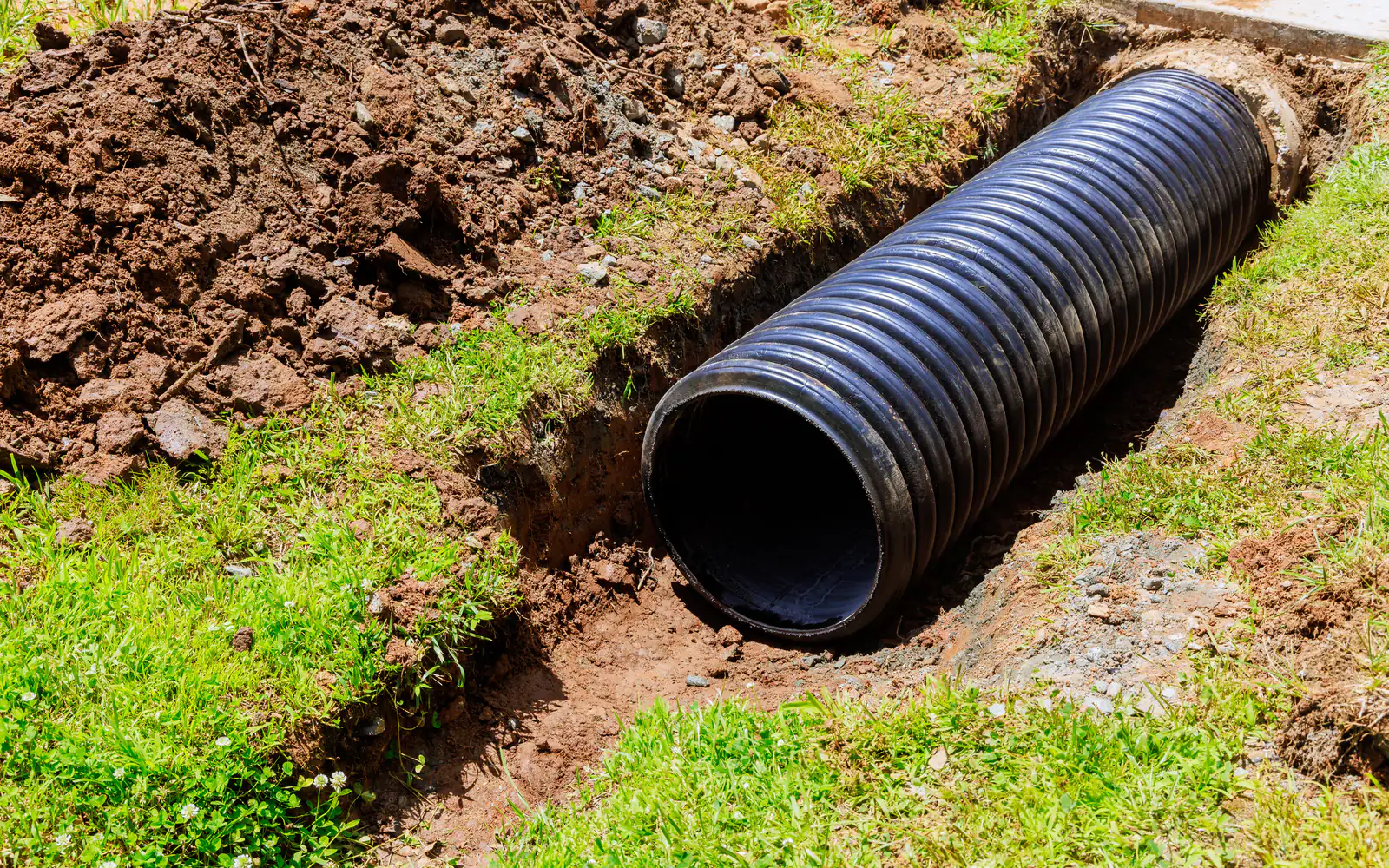
French drain installation
French drains and curtain drains with fabric, washed gravel, perforated pipe and a real outlet, built for heavy clay ground.
Yard drainage solutions
Fixes for standing water, soggy low spots, water at the foundation or barn, hillside washouts and muddy gates.
What a mini excavator is good for
A mini excavator is small enough to fit through a backyard gate and work between a house and a fence line without tearing up the whole lawn. It's strong enough to dig through heavy Ohio Valley clay all day. That puts it right in the middle of the jobs most homes, farms and small acreages actually need.
- Trenches for drain lines, downspout lines and French drains
- Drainage ditches and swales to move water off a yard or field
- Regrading low spots and pulling soil away from a foundation or barn
- Spreading gravel at gates, barn doors and driveway edges
- Cleanup digging after a clearing job: pulling a buried rock, knocking down a dirt pile, smoothing out ruts
If we're already there doing it and they want us to do whatever, we'll do it.
Brushcutrs owner
Why excavation pairs so well with a clearing job
Overgrown ground hides its problems. A fence row full of multiflora rose can hide a gully that's been cutting downhill for a decade. A thicket behind the house can hide the wet spot that keeps the basement damp. Clear it, and the drainage story shows up plainly.
When we clear the land or run the forestry mulcher through it, we're already standing there looking at the ground with you. Adding a drain line or a swale to that trip is simpler than bringing a second crew out later, and it's one bid, one schedule and one set of tracks across the yard.
Small excavation jobs are the whole point
We're straight about what this is. Light excavation means the digging a mini excavator handles well: drainage, trenching, gravel and grading on homes, farms and small properties. We're not digging basements, building roads or moving a hillside for a subdivision.
That's good news if your job is small. Plenty of outfits won't come out for a single drain line. We will. As the owner puts it: “We'll even do a half a day. As long as I can schedule two in a day.”
How a light excavation job runs
We walk the property with you, look at where the water comes from and where it can go, and give you a free estimate. Before anyone digs, the utility lines get marked through the state's call-before-you-dig service, Ohio 811 or Kentucky 811 depending on the side of the river.
We price by the job, not by the hour, so you know the number before the machine shows up. What moves that number is the length of trench, how deep it runs, how much gravel and pipe it takes, how far we have to haul material across the property, and whether it rides along with a clearing job already on the schedule.
Where we do excavation work
We're based in North Bend, just west of Cincinnati, and Northern Kentucky is where we most want to be: Florence, Union, Burlington, Hebron, Independence and the rest of Boone, Kenton and Campbell counties. We also dig across Greater Cincinnati, up toward Hamilton, OH, and over the state line in Southeast Indiana around Lawrenceburg, Aurora and the Dearborn County hills.
For the specific work, see our pages on trenching and drainage excavation, French drain installation and yard drainage solutions.
What people call us for
Common light excavation projects
Downspout lines to daylight
Gutters that dump against the foundation get tied into a buried line that carries the water out to a lower spot in the yard.
A French drain behind the house
Gravel, fabric and perforated pipe in a trench uphill of the house, so groundwater gets caught and carried around it.
A swale across a pasture
A wide, shallow channel that steers runoff around a barn or a horse run-in instead of straight through it.
Gravel at the gate
The spot where the truck and the horses turn every day gets dug out and built back up with gravel so it stops turning to soup.
Cleanup after clearing
Pulling the odd buried rock, flattening old dirt piles and smoothing ruts so a freshly cleared lot is ready to use or build on.
Questions
Light excavation questions
Do you take small excavation jobs?
Yes. A single downspout line or a short French drain is the kind of job we're set up for. Small jobs can be scheduled as a half day, and they often pair with clearing work nearby.
Can you do excavating without a clearing job?
Yes. The work fits most naturally alongside clearing or mulching, because the machine is already on site. If digging is all you need, call or text with a description and a few photos, and we'll tell you honestly whether it's a good fit for a mini excavator.
What kind of mini excavator work is too big for you?
Basements, commercial site work, roads and large-scale grading belong with a full excavation contractor running bigger machines. Our sweet spot is drainage, trenching, gravel and cleanup grading on homes, farms and small properties.
What affects the cost of excavating work?
Trench length and depth, the amount of gravel and pipe, how far material has to travel across the property, and how wet or rocky the ground is. We price by the job after looking at it, so the estimate covers the work rather than the clock.
Who handles getting the utility lines marked?
Every dig starts with the underground utilities marked through Ohio 811 or Kentucky 811, depending on the state. Private lines, like a buried line to a barn or a septic field, aren't covered by that service, so show us where you know they run.
Where we do light excavation
Northern Kentucky first, then Greater Cincinnati, Southeast Indiana and out to Hamilton, Lexington and Georgetown, KY.
Ready to get it cleared?
Call or text us, or send the form. We'll walk the ground with you and give you one price for the job.